Vietnam-Era Combat Art: The Sketchbooks That Came Home
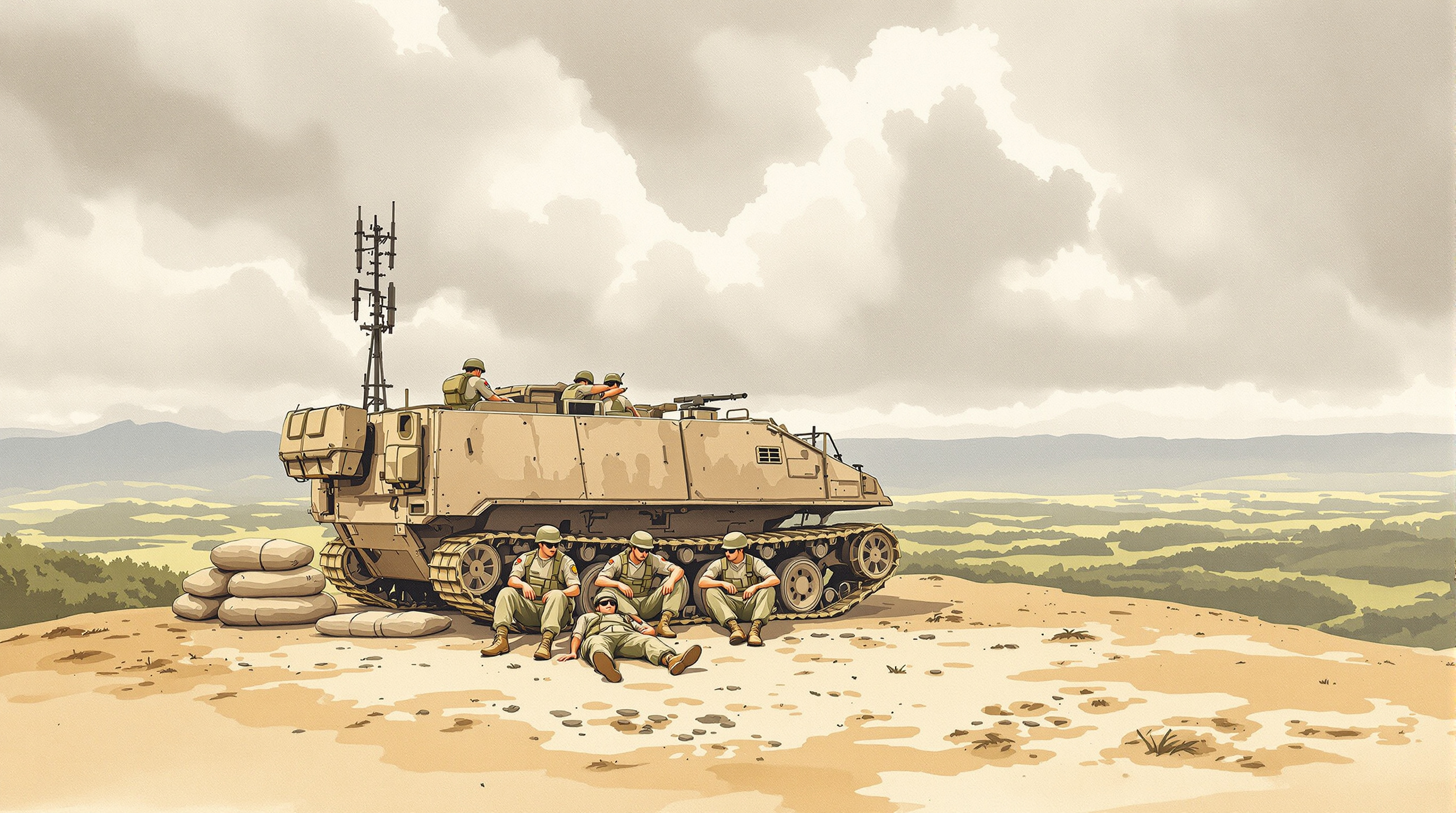
The original gallery in these rooms hung paintings with names like a map of one province and one year: a tracked vehicle on a numbered hill, a village road, the morning after a long night. They were made the way most Vietnam art was made — not on assignment, but afterward, sometimes decades afterward, by hands that had carried a rifle before they carried a brush. This page is about that genre: where official combat art ends, where veteran art begins, and why the quietest pictures are usually the truest.
The Official Programs
Every American service ran a combat art program during the war. Soldier-artists and civilian volunteers were sent out with sketchpads and a simple, radical instruction: draw what you see. The result is one of the great underseen archives of American art — thousands of works now held by the services' historical branches. The U.S. Army Center of Military History maintains its collection to this day, and the Marine Corps, Navy, and Air Force keep theirs. What strikes a first-time viewer is how little combat the combat art contains: it is waiting, mud, mail call, maintenance, faces. The artists understood that war is mostly interval, and they painted the interval.
The Veterans' Genre
The second wave came home with the veterans themselves. Some had sketched in country — margins of letters, the backs of C-ration cases — and worked those fragments up into paintings years later. Others never drew a line until middle age, when the images asked to be let out. Veteran art tends to differ from the official archive in temperature: it is more particular (one hill, one road, one morning, named exactly) and more private. The titles do the locating — Dai Loc, Hill 65 — because for the painter the place name is the painting's true subject. Institutions such as the Vietnam Veterans Memorial Fund have long understood that remembrance lives in objects and images as much as in names cut into granite.
The Machines as Memory
Hardware anchors this genre the way boats anchor coastal art. The Ontos — a slab-sided tracked vehicle bristling with six recoilless rifles, used by Marines and gone from service before the war ended — appears in veteran paintings far out of proportion to its numbers, precisely because anyone who served alongside one never forgot it. Helicopters carry the genre's sound; trucks and amtracs carry its weight. Painted honestly, the machines are not glorification. They are how the memory files itself: you remember the morning by what was parked on the hill.
How to Look at This Work
- Trust the mundane. A painting of men filling sandbags under a flat sky is probably remembering truly; a painting that looks like a movie poster is remembering the movie.
- Read the titles. In veteran art the title is testimony — a date, a hill number, a hamlet. The specificity is the point.
- Let the gaps speak. What the painter leaves out — faces, sometimes; the enemy, almost always — is part of the record.
The next page, From Field Sketch to Studio Canvas, follows the working method — how a margin sketch from 1968 becomes a painting in 1998. And the Pointman pages tell the parallel story of how early veteran websites became galleries, guestbooks, and reunion halls for exactly this art.
A Note on Authenticity and Respect
Because so much veteran art moved by gift and reunion raffle rather than through galleries, it rarely carries the paper trail a dealer expects — no certificate, no provenance file, sometimes not even a legible signature. That absence is not a warning sign in this genre; it is the norm. The authentication that matters here is human: the unit, the campaign, the story a family can still tell about the man who held the brush. Buyers who treat these works like ordinary market objects miss their meaning and often bruise the people keeping them. The kinder and more accurate approach is the archivist's — record what is known, respect what is private, and understand that a modest painting with a true story attached is worth more, in every sense, than a polished one without.
Why This Gallery Sits Beside the Coastal Rooms
Visitors sometimes asked why a coastal art site kept a war gallery at all. The answer is the genre's oldest one: the same eye that learns a coastline learns a province of rice country, and many of the Northwest's marine painters first drew seriously in uniform. The two rooms share a discipline — paint the place exactly, name it honestly, let the weather carry the feeling — and they share an audience of people for whom the pictures are not decoration but record. The galleries differ only in what came home in the sketchbook.