Originals: One Painting, One Wall
The original gallery on this site was always the smallest room with the longest visits. Prints and cards travel well and multiply happily, but an original painting exists exactly once, and the difference is not snobbery — it is physics. This page is a primer for the first-time buyer of original art: what you are actually acquiring, how to look at it, what to ask, and why the right original, bought slowly, beats a wall of hurried prints.
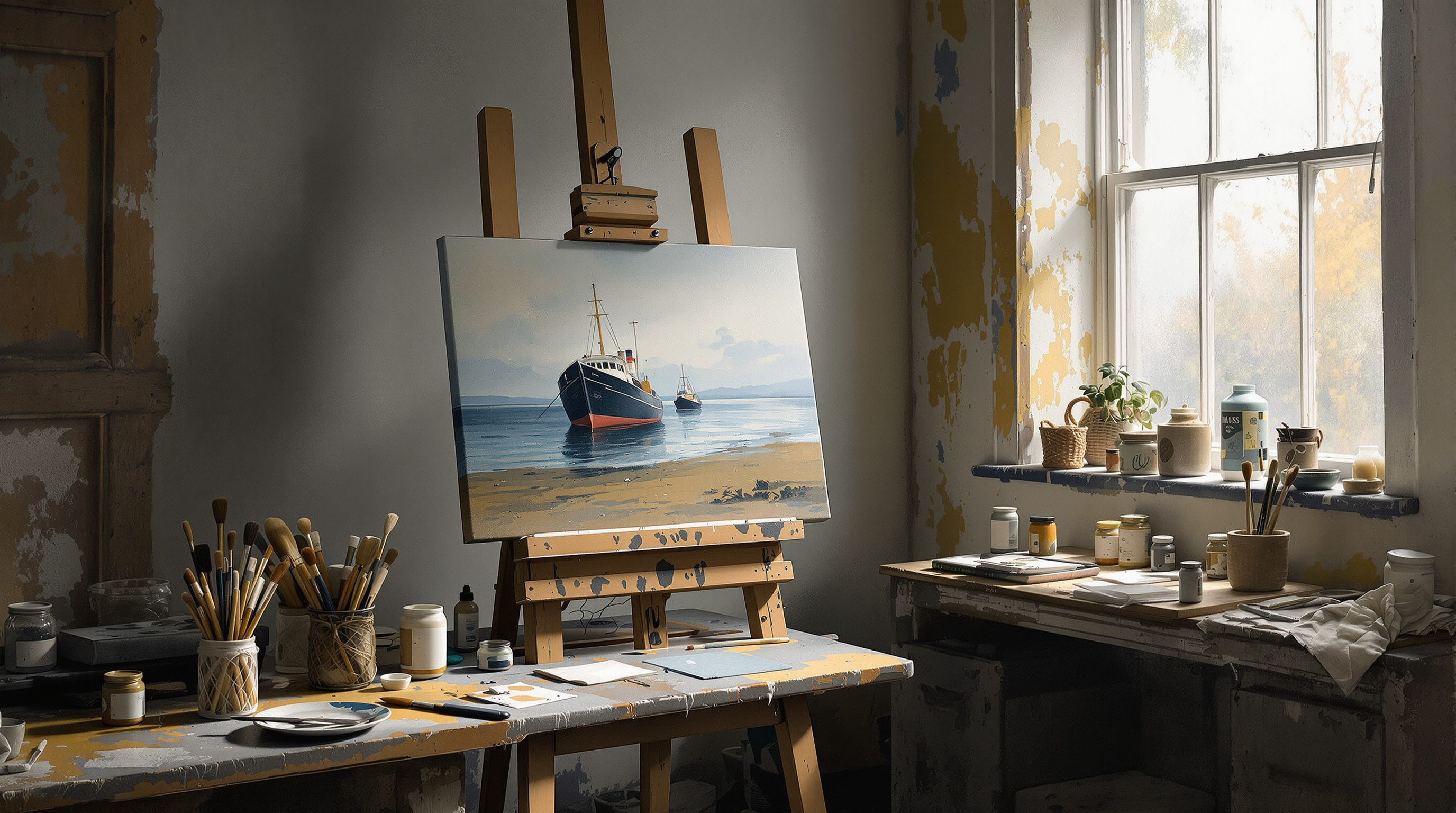
What an Original Actually Is
An original is the working surface itself — the board or canvas where the decisions happened. Under raking light you can read the history: pencil ghosts under thin passages, ridges where the painter changed the weather, the pentimento of a mast moved two inches to fix a composition. Reproductions, however fine, record only the final state. The original records the argument. That is what you pay for, and it is also what you must protect; paint and ground move with humidity in ways paper never does, and conservators publish sound household guidance — the American Institute for Conservation's Caring for Your Treasures pages are the standard reference.
How to Look Before You Buy
- Cross the room twice. A good painting reads at six metres (composition, value structure) and again at sixty centimetres (drawing, surface). Many failed paintings work at only one distance.
- Check the edges. Confident painters resolve their corners and edges; trouble hides there first.
- Ask for the painting's story. Where was it painted, from what reference, in what year? In regional art the story is part of the object — the named inlet, the remembered boat.
- Mind the support. Stretched canvas, cradled panel, or board: each ages differently. None is wrong; all should be sound, square, and dry.
Titles, Subjects, and the Regional Canon
The old room here hung canvases with titles like a chart of the painter's affections — a wolf mid-stride, two eagles in argument over a snag, a chase across open water, a daughter's name given to a boat. Regional originals work this way: their subjects are local and their titles are testimony. A collector building in this genre does well to buy the subject they already know — the inlet they fish, the species they watch — because familiarity is the best forgery detector and the deepest source of pleasure.
Price, Patience, and Provenance
Original regional art is the rare market where ordinary households can own the top of the form. A major canvas from a living regional painter typically costs what a good sofa costs, and unlike the sofa it appreciates attention. Keep every document: the receipt, the artist's note, the show card. Provenance in this market is usually one page long, which makes it both easy to keep and devastating to lose. If your interest runs toward editioned work instead, our guide to cards and edition prints explains that side of the ledger, and the coastal galleries show the subjects these originals come from.
Living With It
Hang originals away from south windows and heat sources, on two hooks, with a centimetre of air behind the frame. Dust with a dry sable brush, never a cloth. And rehang the room every year or two — paintings go invisible on a wall the way furniture does, and a move of three metres restores a canvas you had stopped seeing. The whole point of the original is presence; arrange your house so the presence keeps working.