Pacific Northwest Coastal Art, Painted from the Water Line
Some coastlines are painted from the beach. The British Columbia coast has mostly been painted from the deck of a boat. Quarter Master Design has been part of that tradition since the late 1990s — the watercolours and acrylics of the working coast, the wildlife of the Inside Passage, the village scenes of Haida Gwaii and the mainland inlets, and the small, stubborn art forms that grew up around them: the five-by-seven art card, the open edition print, the species chart pinned above a galley table.
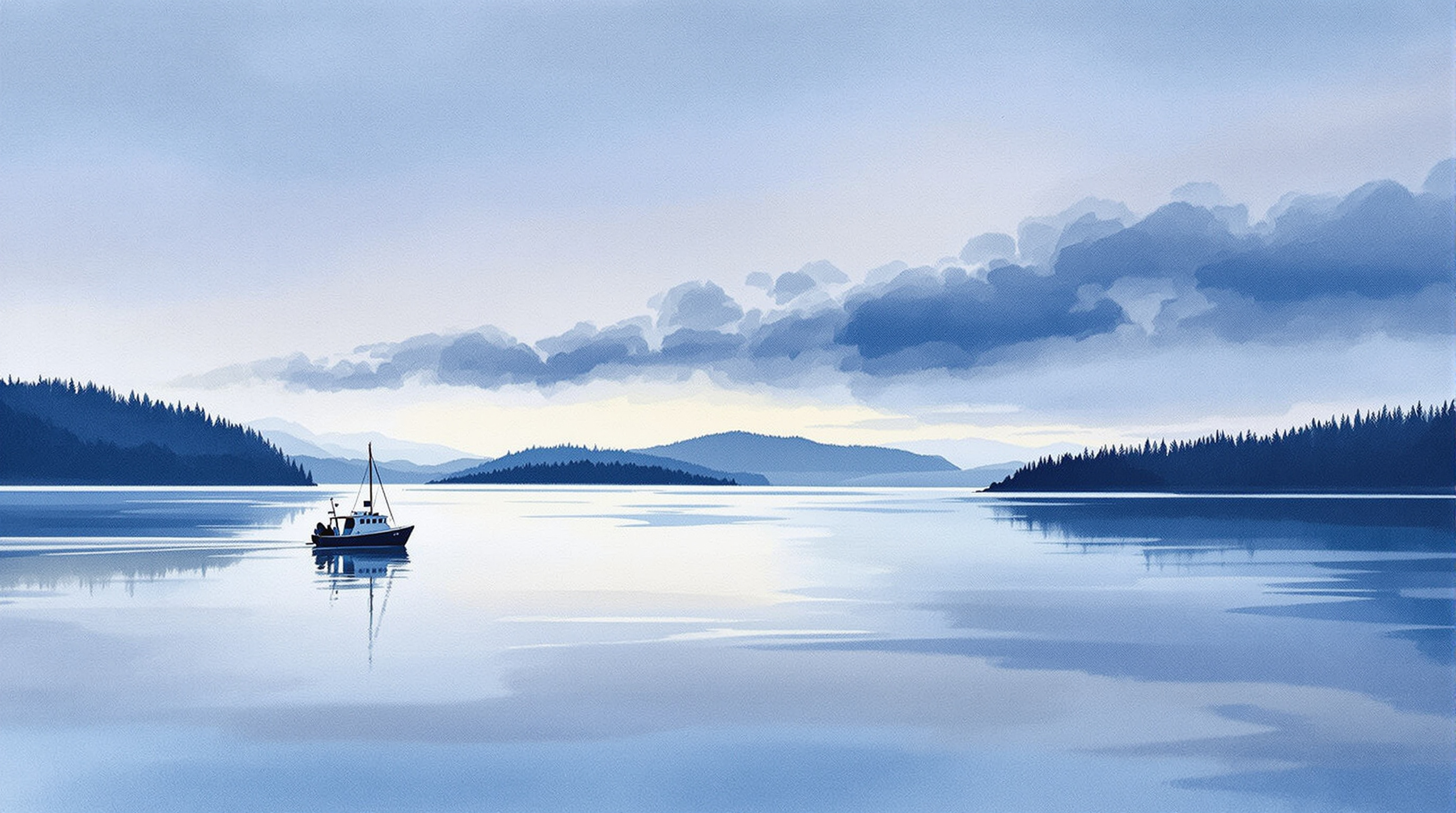
Quarter Master Design opened as a working artist's print gallery, organized into coastal galleries, Vietnam-era military art, and original paintings. The artist behind Quarter Master Design painted these waters from Nanaimo, British Columbia.
The Coastal Galleries
The heart of the collection has always been the coast itself. Our working coast gallery looks at the boats — gillnetters at anchor in Smith Sound, tugs shouldering log booms down Johnstone Strait, pilot boats slipping out past the breakwater. The wildlife pages follow the painters who made eagles, orcas, and grizzlies their lifelong subjects, while the village and heritage gallery considers the most delicate subject on the coast: the settlements, canneries, and First Nations village sites that anchor its human history.
And because the coast has always mixed art with usefulness, we devote a full page to the species chart — that peculiar Northwest hybrid of natural-history illustration and wall art that tells you, at a glance, the difference between a quillback and a copper rockfish.
The Vietnam Rooms
A second, quieter collection covers paintings and drawings from the Vietnam era, made decades after the fact by hands that remembered. Our combat art pages trace that tradition — from official combat artist programs to the private sketchbooks veterans carried home — and the Pointman pages look at how early veteran websites used art to hold memory together.
For Collectors
If you are starting a collection, begin with our collector's guide to art cards and edition prints, which explains sizes, edition types, and what "frameable" actually means, then read the case for originals. Neither page sells anything; both will make you a sharper buyer wherever you find the work you love.
Why This Coast Keeps Calling Painters
The BC coast is roughly 25,000 kilometres of islands, inlets, and weather. Its light changes by the quarter hour. Painters who work it tend to stay with it for life, the way Emily Carr did, returning again and again to the same cedar shorelines until the subject and the painter were hard to tell apart. The Royal BC Museum holds thousands of works and photographs from this tradition, and a day in its galleries is the best single introduction to the coast's visual history we know.
The Vancouver Art Gallery presented That Green Ideal: Emily Carr and the Idea of Nature as its largest Carr solo exhibition in over twenty years, featuring more than 100 works. Listed for February 6–November 8, 2026, the exhibition examined her paintings and writings alongside her ideas about nature. It also considered how her depictions of Indigenous villages and poles related to assumptions of her time. That question offers a useful way into any coastal painting: what was observed, and what did the painter bring to the view?
Start in whichever room suits your weather, and if the site sends you to a gallery, a museum, or a charter dock somewhere up the Inside Passage, it has done its job.
The Small, Stubborn Art Forms
Alongside the framed paintings, this coast bred a family of humbler objects the galleries rarely dignify but collectors quietly love: the five-by-seven art card sold three for a folded dollar at the co-op till, the open-edition print pinned above ten thousand galley tables, the laminated species chart that is half science and half wall art. These forms travelled where canvases could not — into wheelhouses, bunkhouses, and tackle sheds — carrying the coast's imagery to people who would never set foot in a gallery. We treat them as a genre in their own right, because the history of Northwest coastal art is as much the history of what got tacked to a plywood wall as of what hung under museum glass. Our collector's guide sorts card from print from limited edition.
How to Use This Site
Each essay stands alone, but they reward reading in order: coast first, then the war rooms, then the practical pages. The named-landscape essays on Bute Inlet and the Skeena go deepest into single places, and the guestbook page remembers the era when every site like this one kept a visitors' book by the door. Nothing here is for sale, and nothing asks for your email. The coast is the pitch.