Wildlife of the Inside Passage: Eagles, Orcas & Bears in Art
Coastal wildlife art walks a narrow channel. On one side is the field guide — accurate, airless. On the other is the gift-shop fantasy — a wolf howling at an impossible moon. The painters who matter in this genre thread between the two: their animals are anatomically honest, behaviourally true, and still manage to carry the charge that made the painter stop the boat in the first place. This page tours the genre's four great subjects and offers a collector's eye for telling the earned image from the borrowed one.
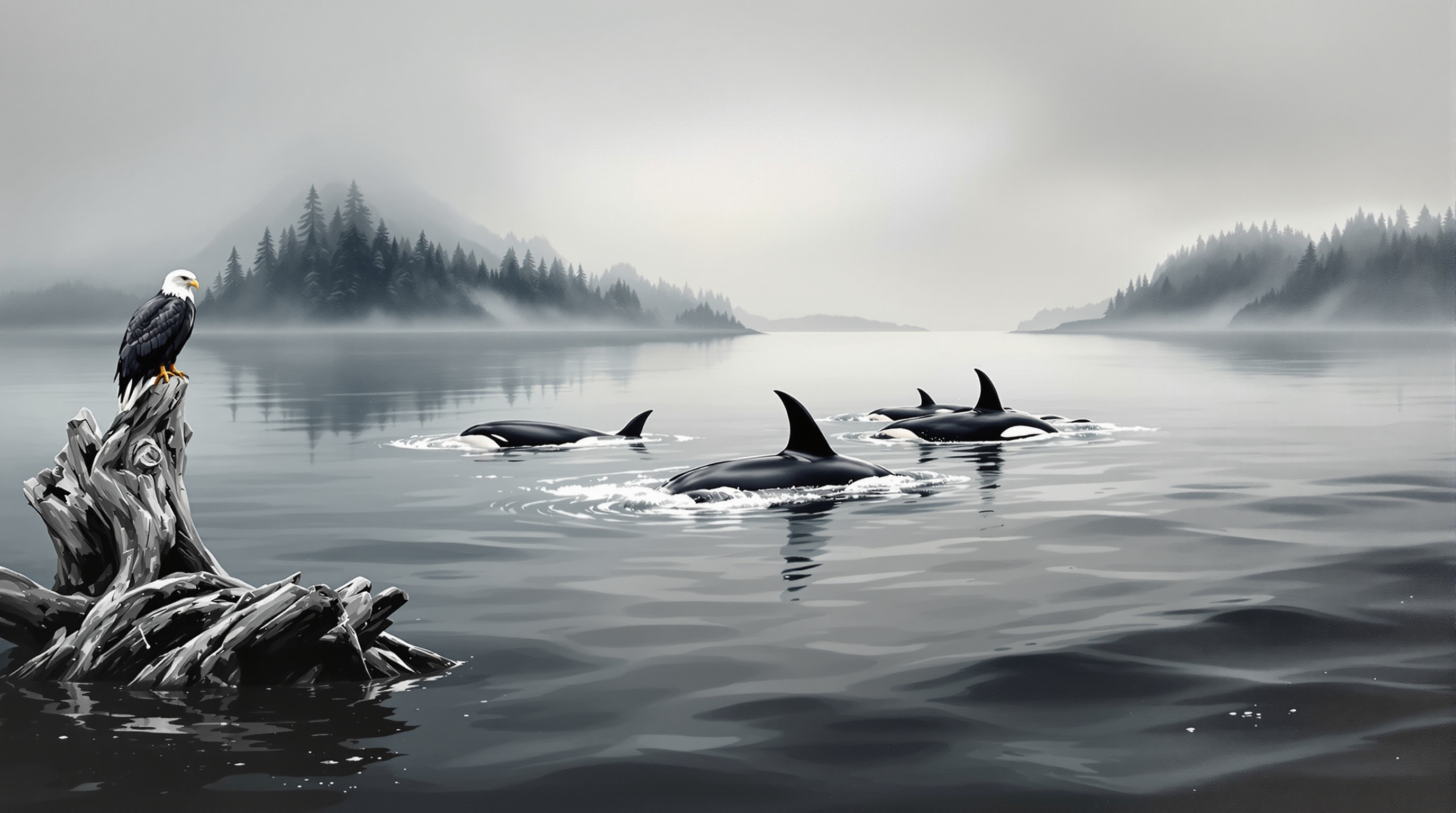
The Bald Eagle: The Coast's Punctuation Mark
Eagles are everywhere on this coast — perched on cannery pilings, spiralling over herring balls, hunched in the rain like wet umbrellas. The painting cliché is the descending strike, talons open. The earned image is usually quieter: an eagle ignoring the weather, or two old birds sharing a snag in companionable silence. Painters who know the species get the proportions right — a five-year-old's clean white head versus the mottled hood of a juvenile — details any reader can verify against the Cornell Lab of Ornithology's bald eagle guide.
The Orca: Painting a Black Mirror
Orcas present a technical problem painters love: a glossy black animal in grey-green water under silver light. The whole composition becomes an exercise in reflection. The classic Inside Passage treatment shows a pod travelling — dorsals staggered like sails in a regatta — rather than breaching, because travelling is what you actually see from a deck. Northern resident pods follow the salmon through Johnstone Strait every summer, and research stations have catalogued individuals for decades by saddle patch and fin shape; serious painters consult those catalogues the way portraitists consult their sitters. NOAA Fisheries' killer whale pages are a sound reference for the biology underneath the brushwork.
Grizzlies and the River Falls
The grizzly at the falls — Wakeman Sound, Knight Inlet, the salmon rivers of the central coast — is the genre's autumn set-piece. Done badly it is a rug with teeth. Done well it is weather, water, appetite, and patience in one frame: the bear's coat loaded with spray, the salmon a silver hyphen mid-air. The honest versions respect how a grizzly actually fishes — feet planted, head low, eyes on the lip of the falls — and let the river supply the drama.
Wolves, Big Cats, and the Rumoured Coast
Coastal wolves swim between islands and eat like shorebirds; cougars cross channels no one believes until the tracks show up. These animals are seen rarely and remembered forever, which is why the paintings of them tend toward the half-glimpsed: a wolf at the tideline at first light, a cat's silhouette in the salal. The genre's restraint here is its strength — the less the animal poses, the more the picture feels like the coast.
The Salmon Underneath Everything
Every animal in this gallery is, in the end, painted around a fish. The eagle on the piling, the travelling orca pod, the grizzly at the falls, the wolf at the tideline — all of them are following the same salmon runs that once filled the canneries, and a wildlife painter who understands the coast paints the food web, not just its most photogenic member. The best canvases in the genre carry that knowledge quietly: a run of pinks darkening the shallows, gulls working a tide rip, the whole scene organized by an abundance the viewer only half-senses. Pacific salmon returns have grown fragile enough that organizations like the Pacific Salmon Foundation now track them river by river, which lends much of this once-ordinary imagery an unexpected weight of record.
A Collector's Checklist
- Behaviour over spectacle. Travelling pods, perched eagles, fishing bears — the coast's real repertoire.
- Light before fur and feather. If the silver overcast is right, the animal will sit in the scene; if it's wrong, no detail will save it.
- Habitat honesty. Kelp lines, tide bands, the right trees. An orca in front of palm-shaped cedars has never been to BC.
- Edition discipline. Wildlife prints are the most heavily editioned corner of coastal art — our guide to cards and editions explains what the numbers mean.
From here, step back to the working coast or forward to the species charts, where wildlife art and natural history merge into a form this coast can fairly claim as its own invention.