Village & Heritage Scenes: Painting the Coast's Human History
The most demanding subject in coastal art is not weather or water. It is the village. Boardwalk settlements on pilings, cannery towns at river mouths, lighthouse stations, and — above all — the historic First Nations villages of this coast ask a painter for more than technique. They ask for homework, and in some cases for permission. This page looks at how the genre's best work handles the coast's human history, and what a thoughtful collector should know before hanging it.
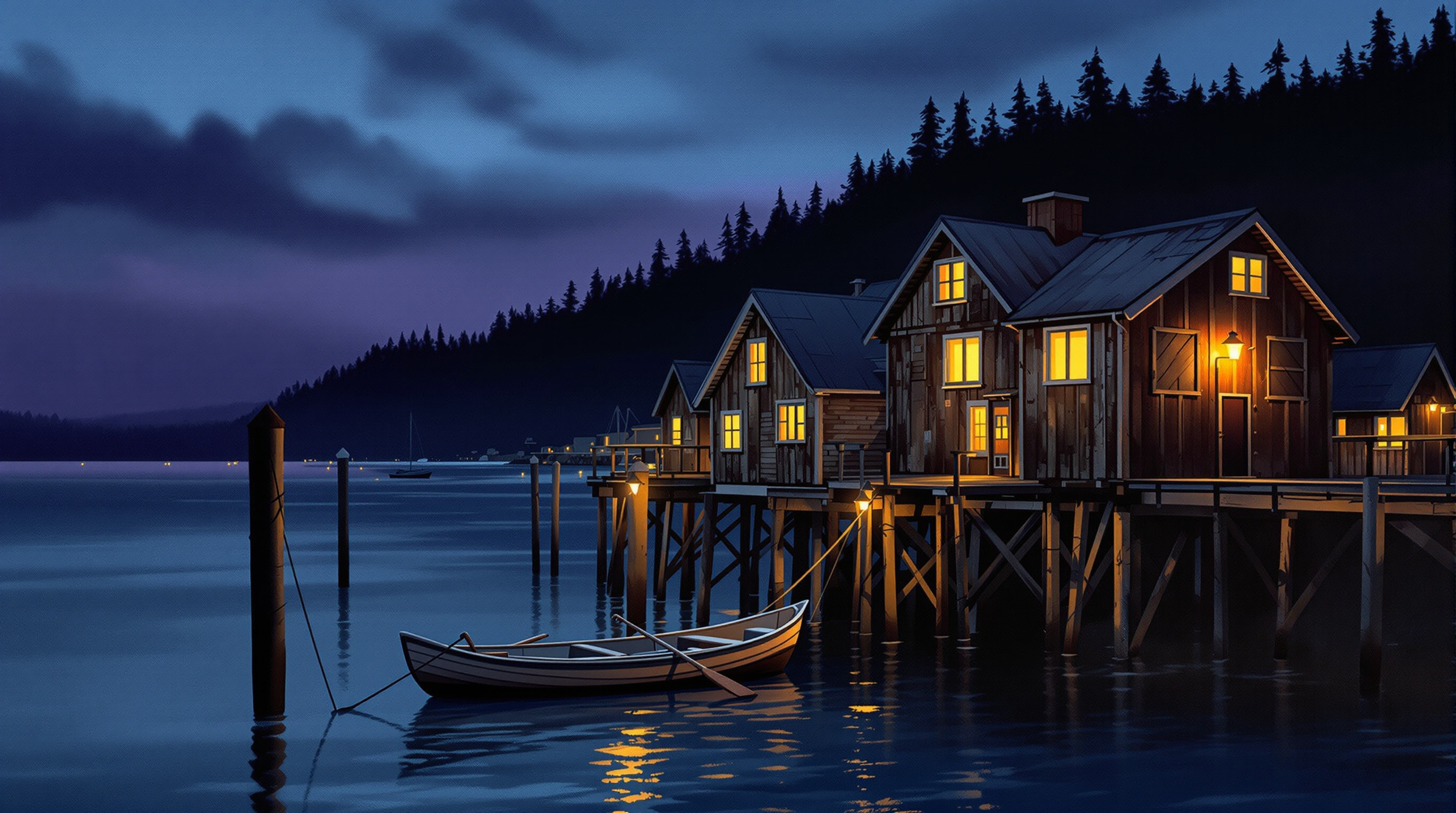
The Boardwalk Settlements
Telegraph Cove, Sointula, Bamfield, the floathouse camps of the mid-coast: these places gave painters a ready-made composition — one long line of weathered buildings between forest and tide. The classic treatment is dusk, lamplit windows, a skiff tied below. What separates the honest version from the souvenir is specificity: the right roof pitches, the tide's height on the pilings, the particular lean of a building that has settled for sixty years. A village painted from memory of postcards looks like every village; a village painted from acquaintance looks like itself, asleep — the mood the old galleries used to title, simply, "while the village sleeps."
Cannery Towns and Company Wharves
Between the 1880s and the 1950s, cannery settlements were the coast's true towns — seasonal cities of net lofts, bunkhouses, and stores that emptied each fall. Most are gone to pilings and blackberry now, which makes the painted record genuinely documentary. Painters working this vein lean on archival photographs, and so can you: the BC Archives holds historical photographs and other records relating to British Columbia, and comparing a canvas to its photographic sources is one of the quiet pleasures of collecting in this genre.
First Nations Villages: The Subject That Demands Respect
Historic village scenes — longhouses above a beach, canoes drawn up, memorial and mortuary poles against the treeline — are among the most reproduced images in all of Northwest coastal art. They are also the most ethically loaded. These are not empty landscapes; they are depictions of living nations' homelands, histories, and cultural property. The villages of Haida Gwaii, such as those preserved within Gwaii Haanas National Park Reserve and Haida Heritage Site, are tended by the Haida Nation, and sites like SG̱ang Gwaay are recognized by UNESCO precisely because they are not generic scenery.
The genre's history includes both careful witnesses and casual appropriators. A responsible collector asks a few plain questions: Does the work depict a real, named place, and does the artist say so honestly? Does it treat poles and longhouses as architecture and monument, or as props? Crest designs and formline art are living cultural property of specific nations and families — paintings that lift them as decoration belong in a different, lesser category than paintings that depict a shoreline truthfully from public water. The Haida Gwaii Museum is an essential stop for anyone who wants to understand these places from the perspective of the people whose history they hold.
Lighthouses, Ferries, and the Connective Tissue
Around the villages hangs the connective tissue of coastal life — light stations on their bare rocks, the ferries and freight boats that were a town's calendar, the church and the school at the head of the dock. These subjects give the genre its warmth. They are small histories, and the paintings that honour them tend to outlast the decorative kind, because every coastal family owns some part of the story.
Continue to the species charts, return to the working coast, or read about Bute Inlet and the Skeena River — two named landscapes that anchor this gallery.